


More than supplements -
A lifestyle. A community. A movement.
Explore
Products
Connect Socially








Published On 15 Apr 2026
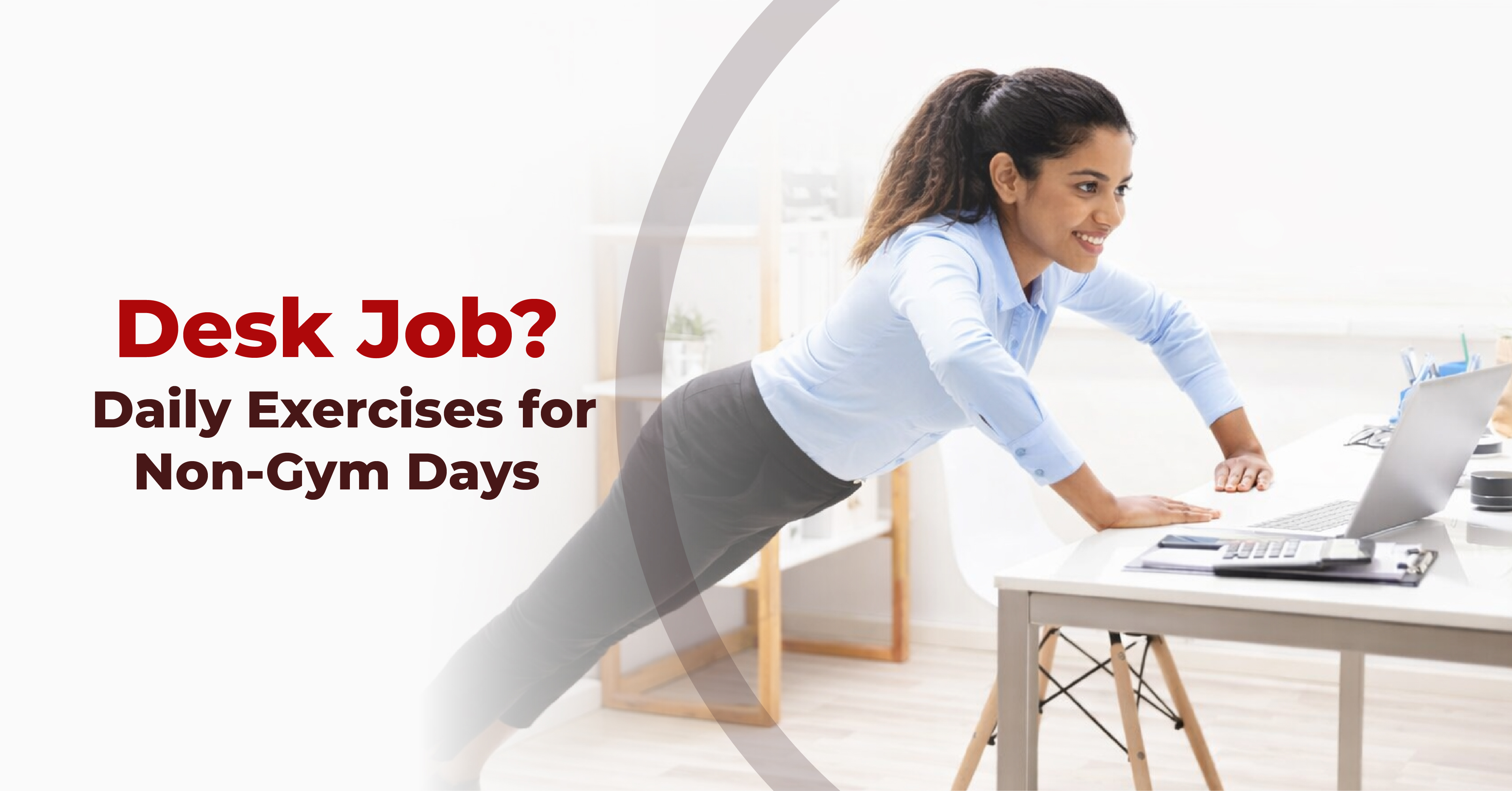
Sitting for long hours can weaken muscles, affect posture, and reduce overall physical activity. Daily exercises for desk job workers, including stretching, mobility movements, and short bodyweight routines, can improve circulation, reduce stiffness, and help maintain body strength-even without visiting the gym.
This guide explores practical exercises that busy professionals can perform at home or in the office to stay active on non-gym days.
Modern work environments often require prolonged sitting. Over time, this sedentary behaviour can negatively affect both physical and metabolic health.
Common issues linked to desk jobs include:
Remaining inactive for extended periods may also slow circulation and reduce energy levels.
Regular movement throughout the day can counteract these effects and support long-term health.
Incorporating short workouts or stretches into your daily routine can provide several benefits.
Key benefits include:
Even 10 minutes of movement per day can help reduce the negative impact of prolonged sitting.
Stretching helps release muscle tension and restore mobility after long hours of sitting.
Neck Stretch
Neck stiffness is common among people who spend hours looking at screens.
How to perform:
This stretch relieves tension in the neck and upper shoulders.
Seated Spinal Twist
This stretch helps improve spinal mobility and relieve lower back tension.
Steps:
Shoulder Rolls
Prolonged typing often causes shoulder stiffness.
How to do it:
This simple movement promotes better circulation in the upper body.
Short workouts are ideal for professionals with busy schedules.
Try this quick bodyweight routine:
1. Bodyweight Squats - 15 repetitions
Squats strengthen the legs and activate large muscle groups.
2. Wall Push-Ups - 12 repetitions
These improve upper body strength and posture.
3. Glute Bridges - 15 repetitions
Helps counteract prolonged sitting by activating the glutes.
4. Standing Calf Raises - 20 repetitions
Improves lower leg circulation and muscle strength.
5. Plank Hold - 20-30 seconds
Strengthens the core and supports spinal stability.
Repeat this routine two to three times for an effective short workout.
Poor posture is one of the most common issues among desk workers.
Chest Opener Stretch
Sitting often tightens chest muscles.
Steps:
This stretch opens the chest and reduces forward shoulder posture.
This exercise helps reset spinal alignment.
How to perform:
This improves awareness of correct posture.
Beyond workouts, small lifestyle habits can significantly improve activity levels.
Practical strategies include:
These small adjustments help maintain consistent daily movement.
Exercise alone is not enough to support physical performance and recovery.
Balanced nutrition plays a crucial role in maintaining muscle strength and energy levels.
Key nutrition tips for busy professionals:
When combined with regular activity, proper nutrition supports muscle health and overall wellbeing.
1. How often should desk workers exercise during the day?
A: Ideally, desk workers should move every 30–60 minutes, even if it’s a short stretch or brief walk. Regular movement helps reduce stiffness and improves circulation.
2. Can a 10-minute workout be effective?
A: Yes. Short workouts can still improve strength, mobility, and energy levels, especially when performed consistently.
3. What is the best exercise for people who sit all day?
A: Exercises that activate the glutes, core, and back muscles—such as squats, glute bridges, and planks—are particularly beneficial.
4. How can I improve posture while working at a desk?
A: Maintain a neutral spine, keep your monitor at eye level, and perform regular posture stretches to reduce strain.
5. Do desk exercises help reduce back pain?
A: Gentle stretching and strengthening exercises can help relieve muscle tension and support spinal health, which may reduce discomfort over time.
Staying active while working a desk job can be challenging, but small daily habits and simple exercises can make a meaningful difference. Incorporating short stretches, quick bodyweight workouts, and posture-correcting movements helps maintain mobility, reduce stiffness, and support overall physical health.
Alongside regular movement, balanced nutrition plays an important role in supporting muscle function and energy levels. Kratoz Nutrition focuses on providing nutritional solutions that complement active lifestyles and help individuals maintain strength, endurance, and recovery as part of a well-rounded fitness and wellness routine.
Best Indian Diet Plan for Muscle Gain
Building muscle is not only about lifting heavier weights in the gym. Nutrition plays a major role in muscle growth, strength development, recovery, and healthy weight gain.

Jhon
Fitness coach
Share
Things to Know Before Joining the Gym
Joining a gym is a great step towards better health—but starting without the right knowledge can lead to confusion or even injury.
Jhon
Fitness coach
Share
Street Food vs Fitness Goals: Smart Choices Guide
Yes—but it depends on what and how you choose. Completely avoiding your favourite foods isn’t always realistic, especially if you’re trying to build sustainable fitness habits.
Jhon
Fitness coach
Share
More than supplements -
A lifestyle. A community. A movement.