



More than supplements -
A lifestyle. A community. A movement.
Explore
Products
Connect Socially








Published On 25 Apr 2026
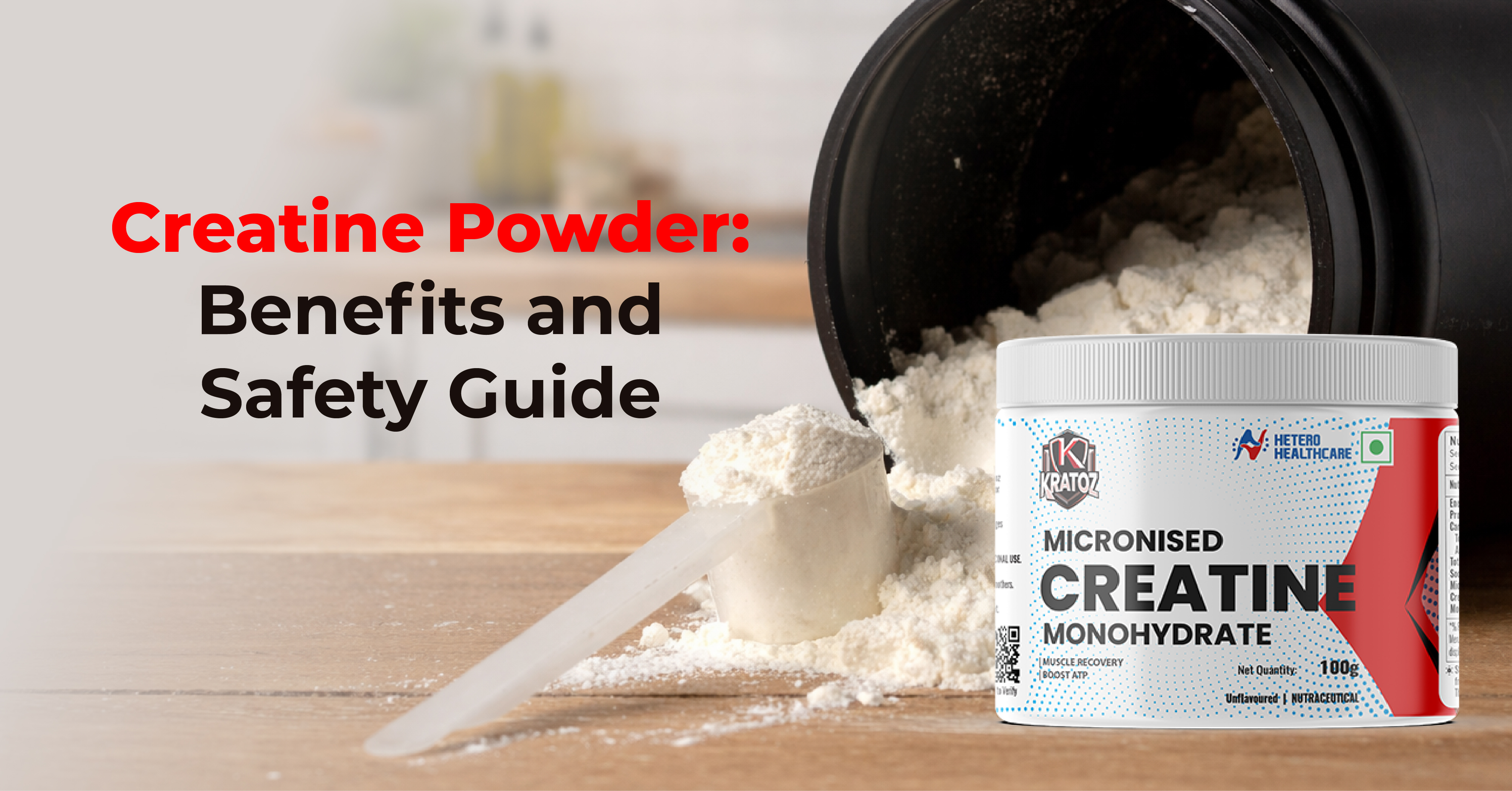
Creatine powder is one of the most widely researched sports supplements used to support muscle strength, exercise performance, and recovery. When used correctly and in recommended amounts, creatine is generally considered safe for healthy adults and may help improve high-intensity training results.
This guide explains the benefits of creatine powder, how to take it properly, possible side effects, and what beginners should know before starting supplementation.
Creatine is a naturally occurring compound found in small amounts in foods such as meat and fish. It is also produced by the body and stored primarily in muscle cells.
Creatine plays an important role in energy production during short bursts of high-intensity exercise, such as weightlifting, sprinting, or resistance training.
Creatine supplements-especially creatine powder-are commonly used by athletes, fitness enthusiasts, and individuals looking to support muscle performance.
Creatine helps replenish adenosine triphosphate (ATP), which is the main source of energy used during intense physical activity.
Key functions of creatine include:
Because of these effects, creatine supplementation is often used to support strength and training capacity.
One of the most recognised benefits of creatine is its ability to support strength during resistance training.
Studies have shown that creatine may help improve performance in activities that involve short bursts of intense effort, such as weightlifting and sprinting.
Creatine may contribute to muscle growth in two ways:
These effects can support greater training volume, which may contribute to muscle development over time.
Creatine supplementation may help improve performance during repeated high-intensity efforts.
Athletes often use creatine to support:
Improved performance during workouts can help individuals train more effectively.
Some research suggests that creatine may help reduce muscle fatigue and support recovery between sets or training sessions.
By helping restore energy stores in muscles, creatine can contribute to more efficient recovery after intense exercise.
Creatine powder is typically mixed with water, juice, or a protein shake.
Common creatine intake approaches include:
Some individuals begin with a loading phase of 20 grams per day for 5-7 days, divided into smaller servings, followed by a maintenance dose.
However, the loading phase is not essential for everyone.
Consistency is more important than timing when using creatine supplements.
There is no universally agreed “perfect” time to take creatine.
However, many people prefer taking creatine:
The most important factor is taking creatine regularly each day to maintain muscle creatine stores.
This is the most studied and widely used form of creatine.
Benefits include:
Some alternative forms include:
While these products exist, many studies continue to support creatine monohydrate as the most reliable and researched option.
Creatine is generally considered safe when taken within recommended dosages.
Possible mild side effects may include:
Most side effects occur when large doses are consumed or when hydration is insufficient.
Individuals with kidney conditions or underlying health issues should consult a healthcare professional before using creatine supplements.
Creatine may be useful for individuals involved in:
It may also benefit beginners starting structured resistance training programmes.
However, supplementation should always complement a balanced diet and proper training plan.
1. Is creatine powder safe to use daily?
A: For healthy adults, creatine is generally considered safe when used within recommended doses and combined
with adequate hydration.
2. Does creatine help build muscle?
A: Creatine may support muscle development by improving workout performance and increasing muscle cell
hydration.
3. Should beginners take creatine?
A: Beginners involved in resistance training may choose to use creatine, but it should complement proper
nutrition and training routines.
4. Can creatine cause side effects?
A: Some individuals may experience mild bloating or digestive discomfort, particularly when taking high doses.
5. Do I need a loading phase for creatine?
A: A loading phase is optional. Many individuals achieve similar benefits by taking a consistent daily
maintenance dose.
Creatine powder remains one of the most widely studied and commonly used supplements in sports nutrition. When used responsibly and combined with consistent training, balanced nutrition, and adequate hydration, creatine may support strength, exercise performance, and muscle development.
Understanding proper dosage, timing, and safety considerations helps individuals make informed decisions about supplementation. Kratoz Nutrition focuses on developing nutritional solutions designed to complement active lifestyles and support fitness goals through well-balanced supplementation and training support.
Best Indian Diet Plan for Muscle Gain
Building muscle is not only about lifting heavier weights in the gym. Nutrition plays a major role in muscle growth, strength development, recovery, and healthy weight gain.

Jhon
Fitness coach
Share
Things to Know Before Joining the Gym
Joining a gym is a great step towards better health—but starting without the right knowledge can lead to confusion or even injury.
Jhon
Fitness coach
Share
Street Food vs Fitness Goals: Smart Choices Guide
Yes—but it depends on what and how you choose. Completely avoiding your favourite foods isn’t always realistic, especially if you’re trying to build sustainable fitness habits.
Jhon
Fitness coach
Share
More than supplements -
A lifestyle. A community. A movement.